








Signature Build
Starting at $12,500
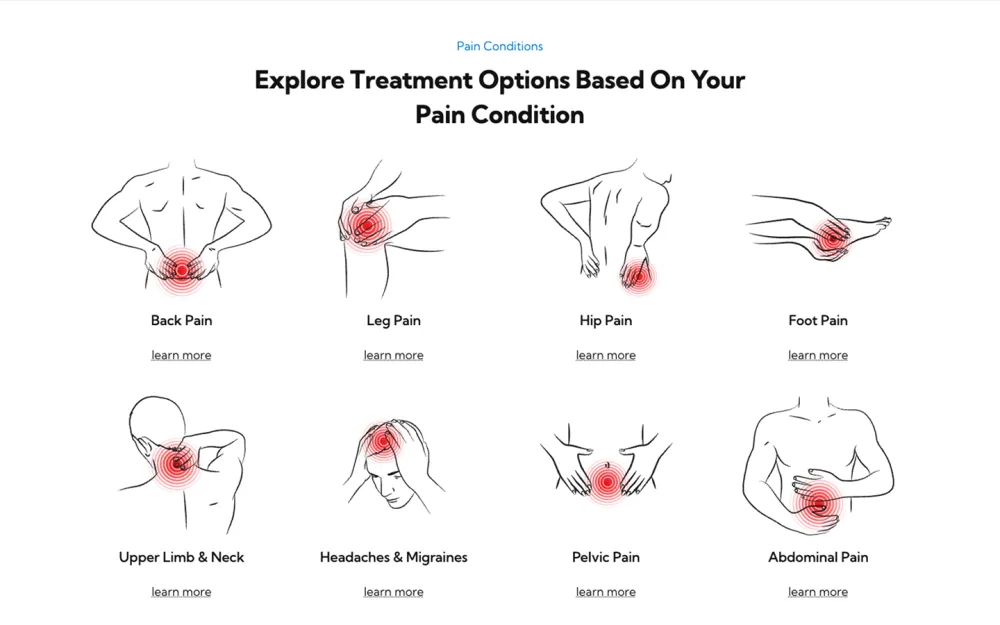
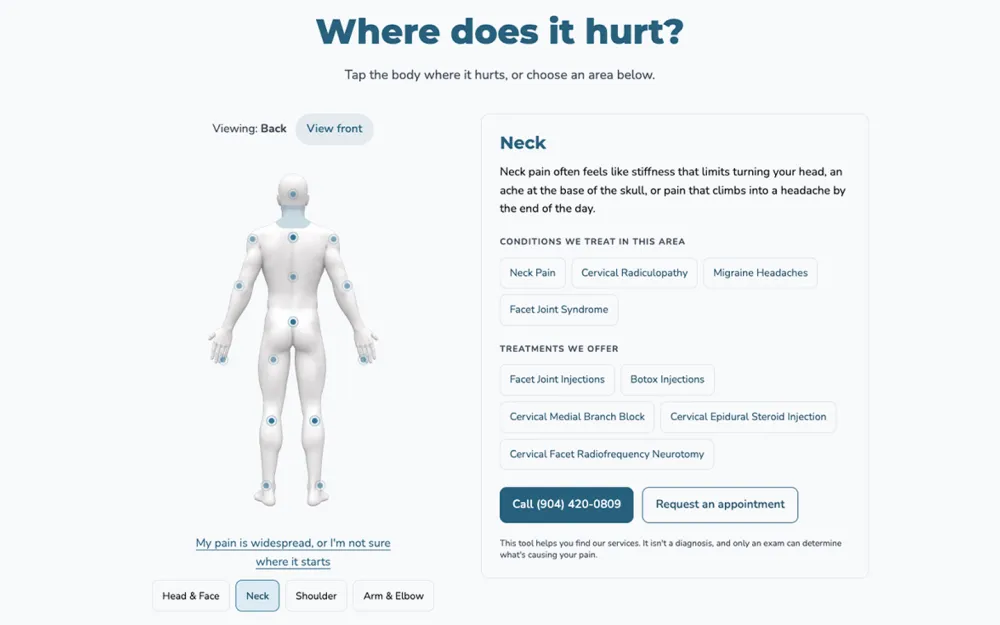
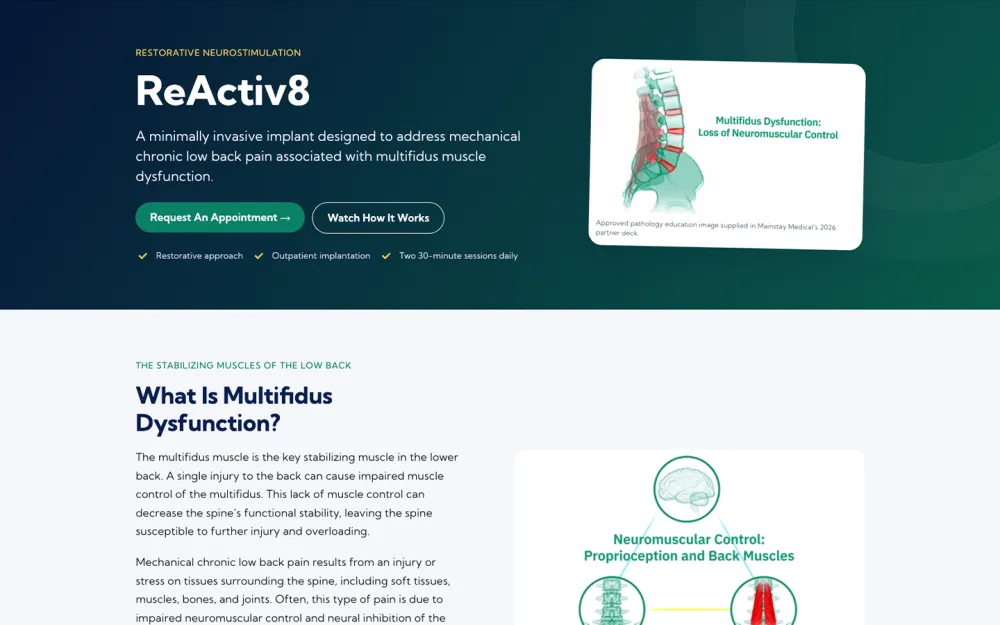
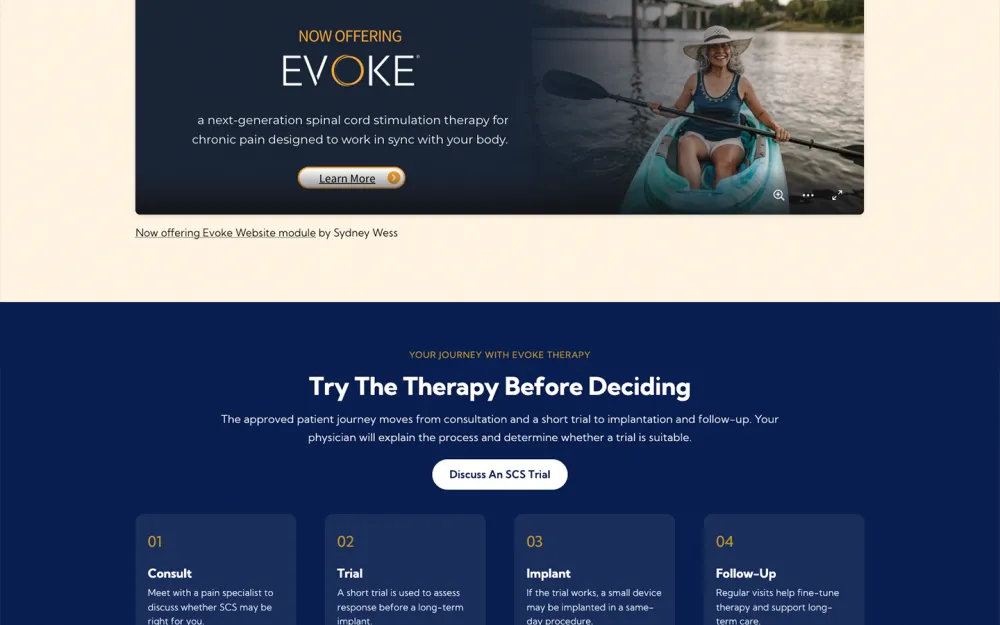
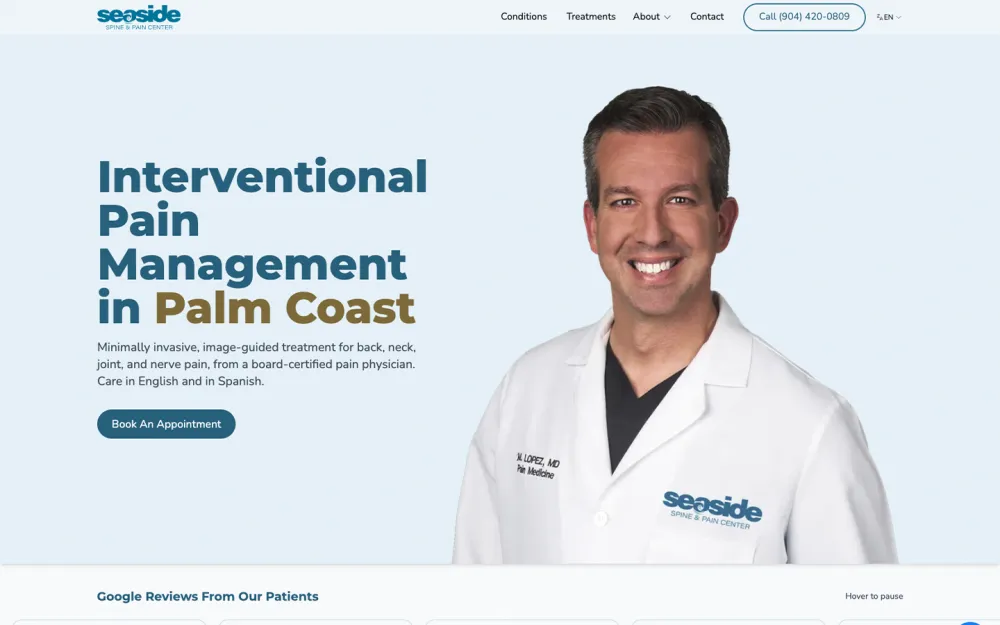
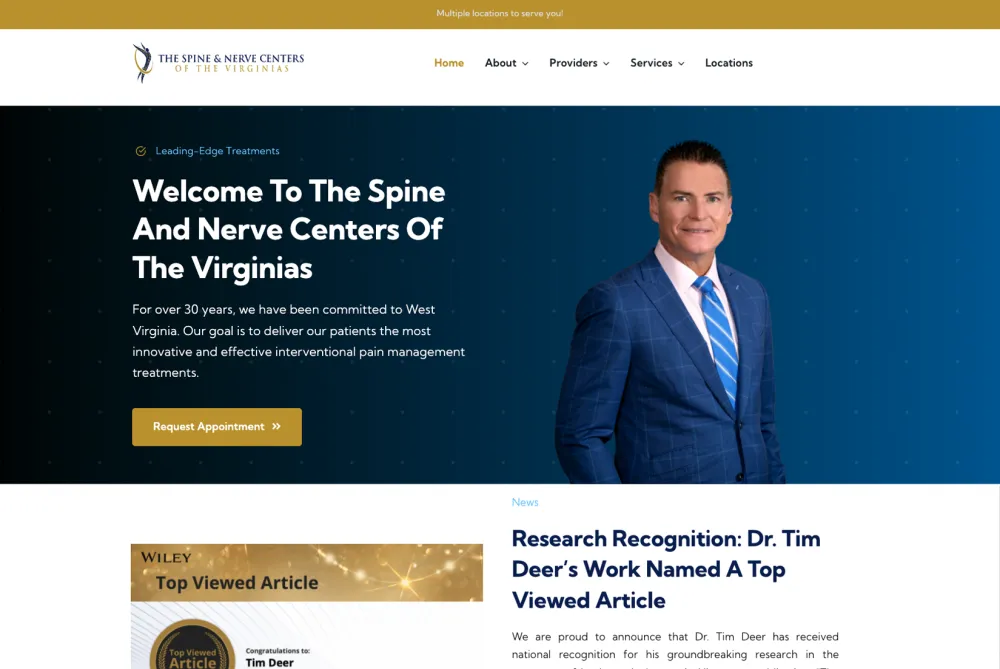
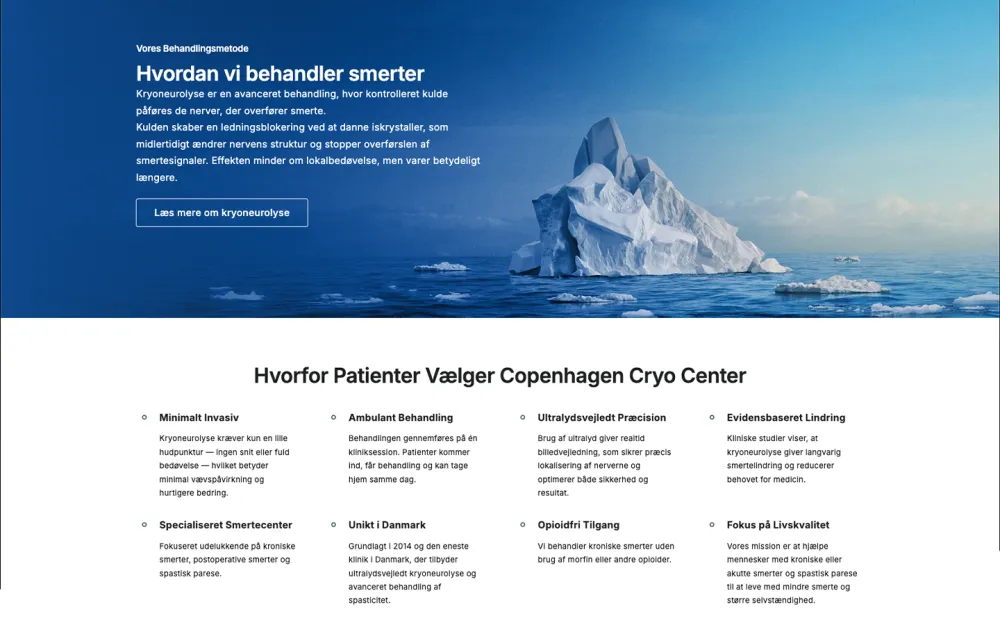
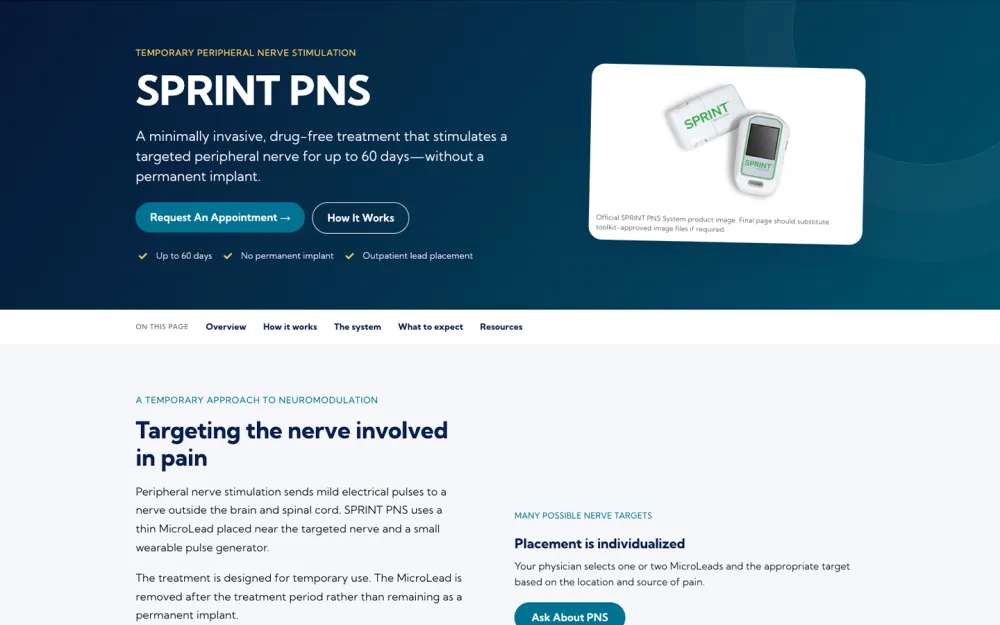
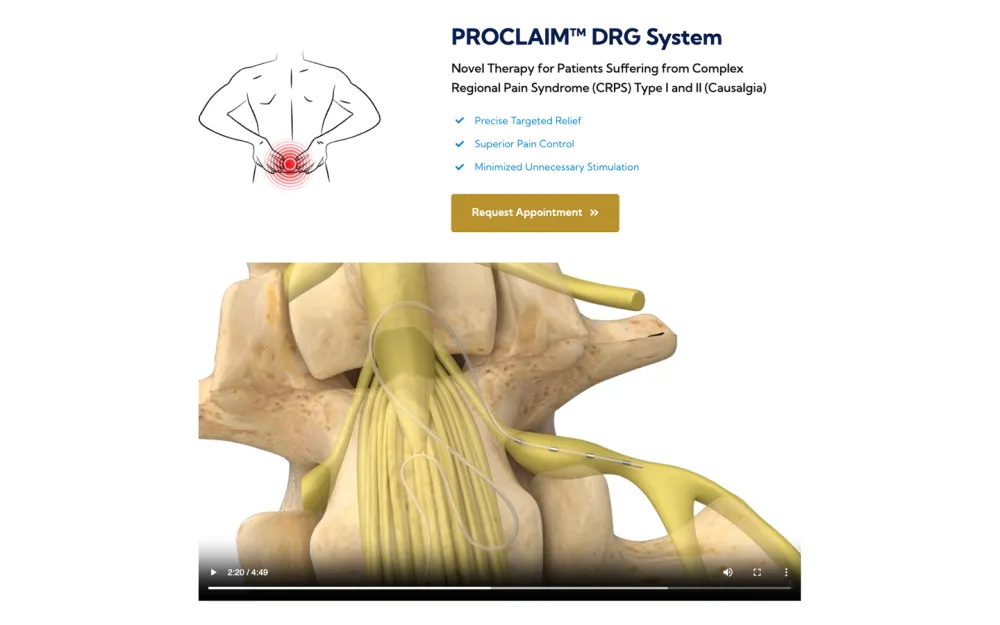
A complete site built for your practice: every condition, procedure, and treatment you perform, a visual identity that is yours alone, and physician review on every clinical page before anything goes live.
Built around how a patient in pain actually searches, and designed to turn that search into a booked appointment.
Recent work
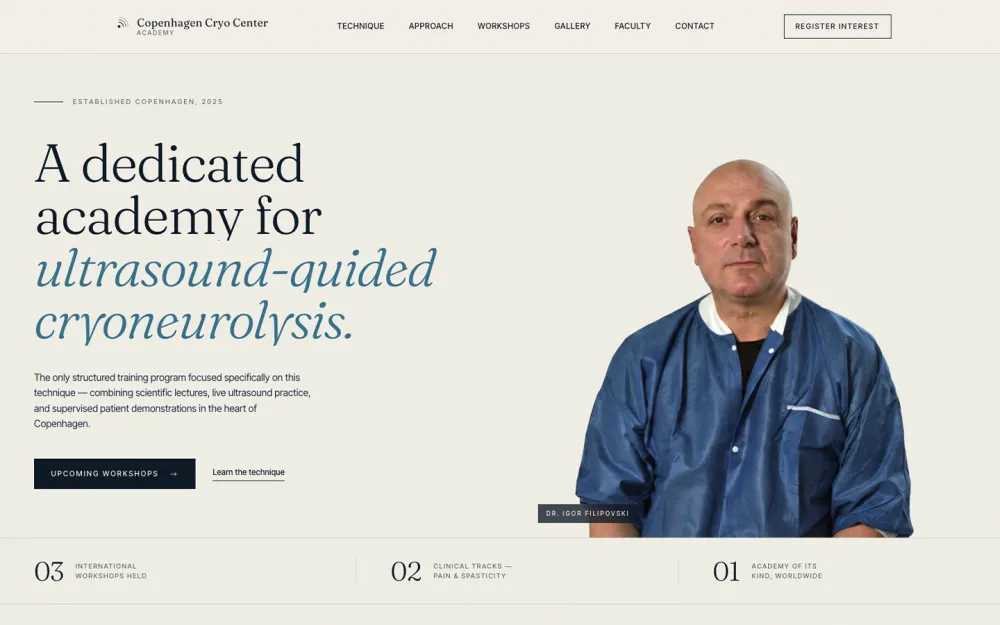
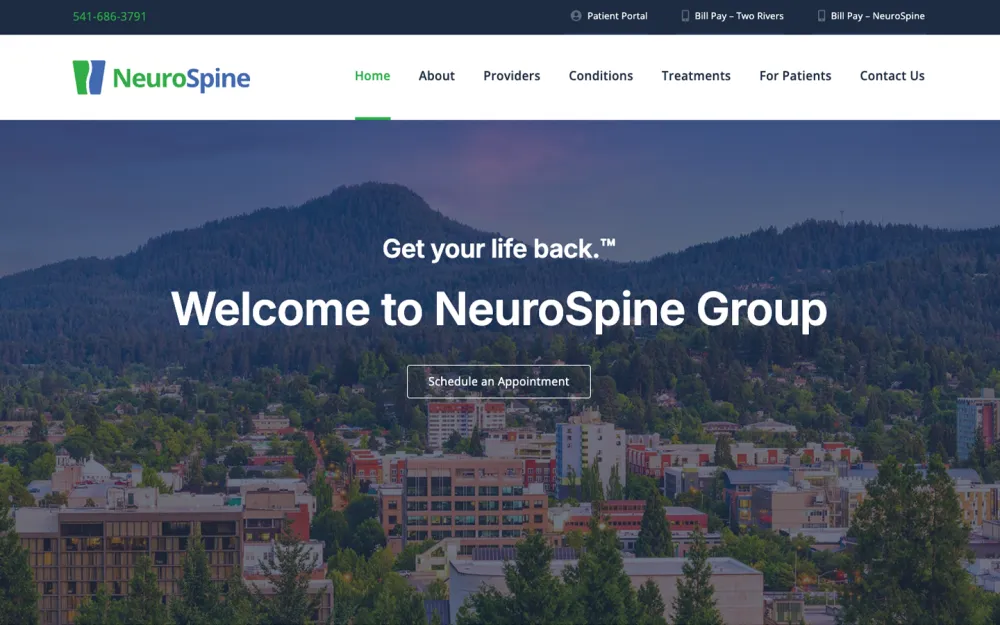
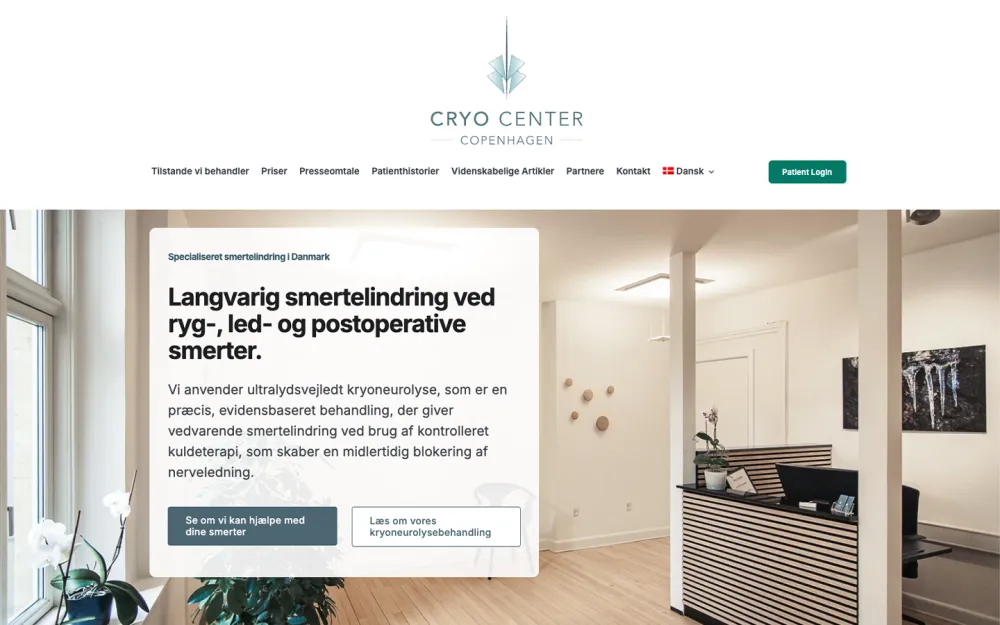
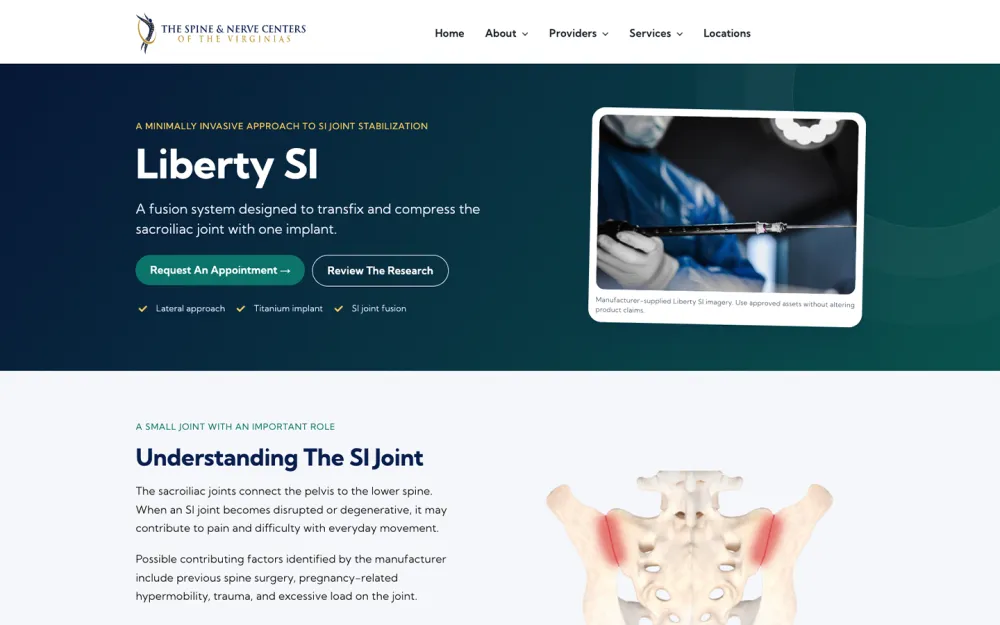
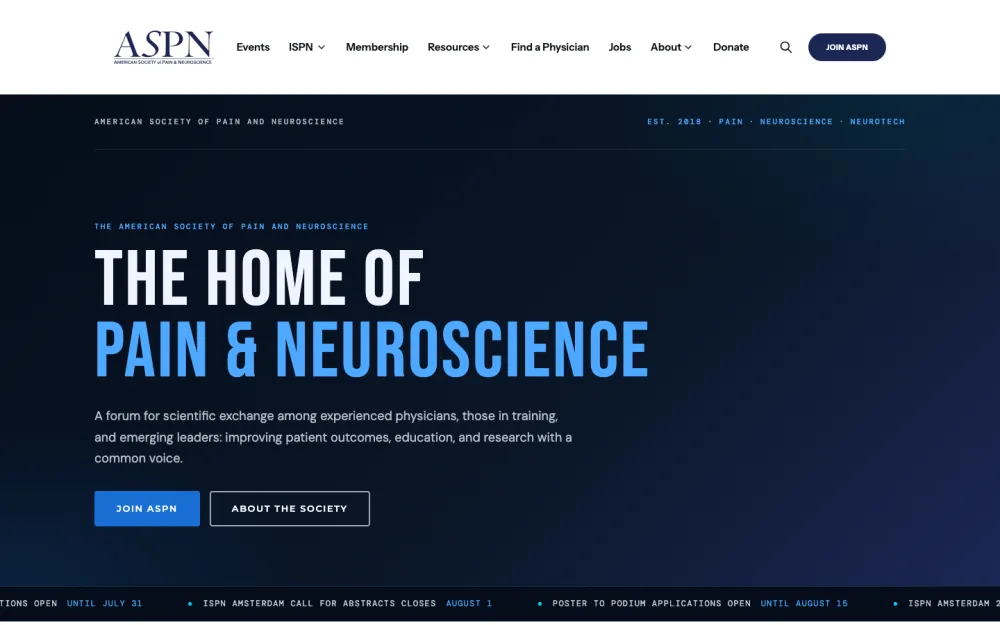
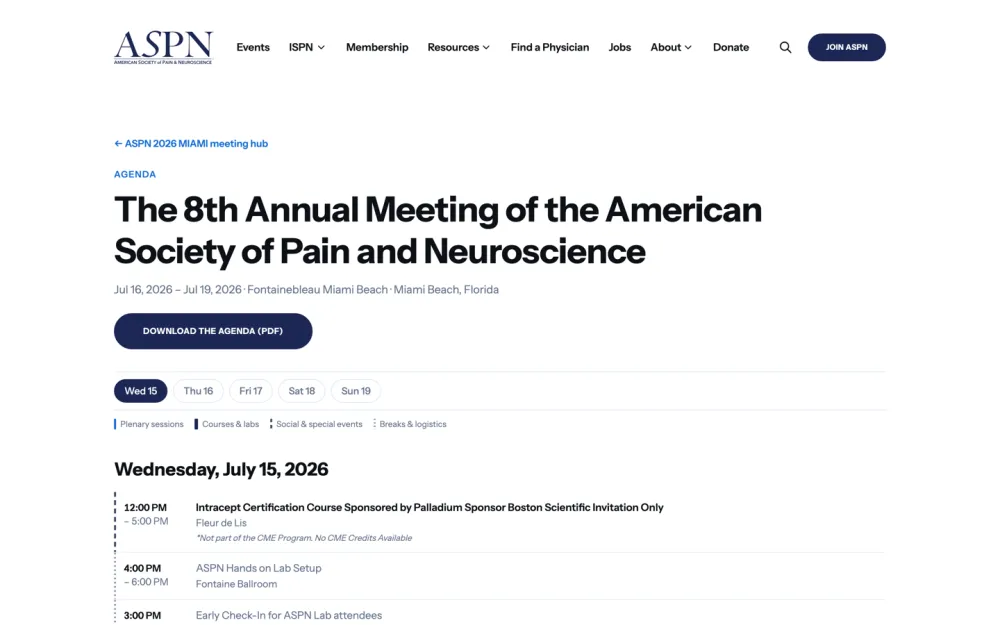
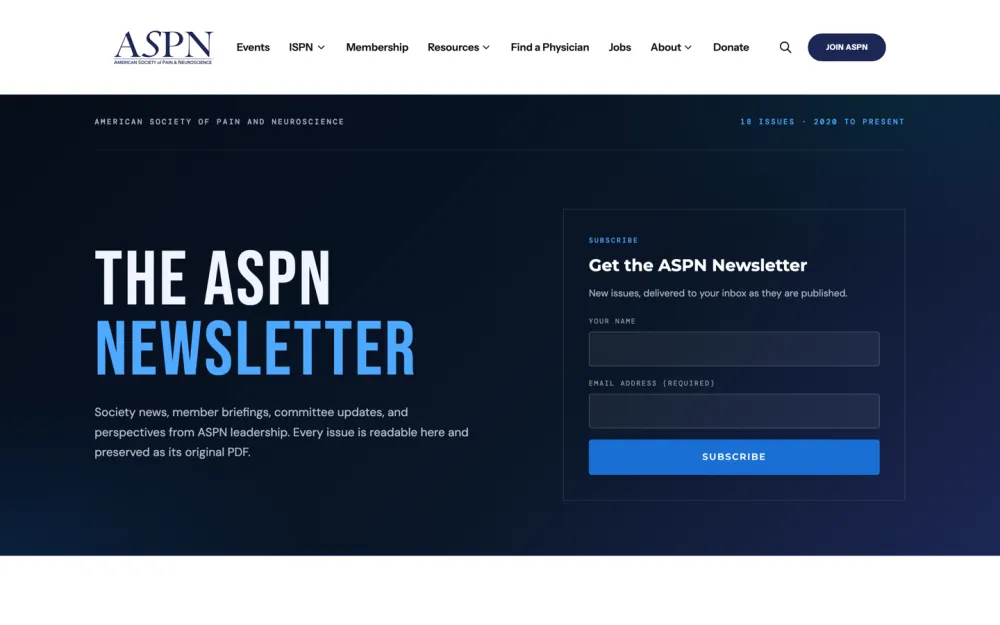
aspnpain.com is the new home of the American Society of Pain and Neuroscience: an interactive meeting agenda, a physician finder, a searchable guidelines library, a rebuilt job board. Your clinic does not need 361 pages. It needs the same engineering under the hood.



Starting at $12,500
A complete site built for your practice: every condition, procedure, and treatment you perform, a visual identity that is yours alone, and physician review on every clinical page before anything goes live.
Let's talk
Societies, multi-site groups, special scope. The society rebuild was a Bespoke project.
One-time build fee. Flat monthly fee for hosting, security, and updates. No surprise add-ons.
We take a limited number of build slots each month.
What you keep
Code, domain, hosting account, every word and image. If we ever part ways, it all goes with you, documented so any competent developer can take over.
Reputation management
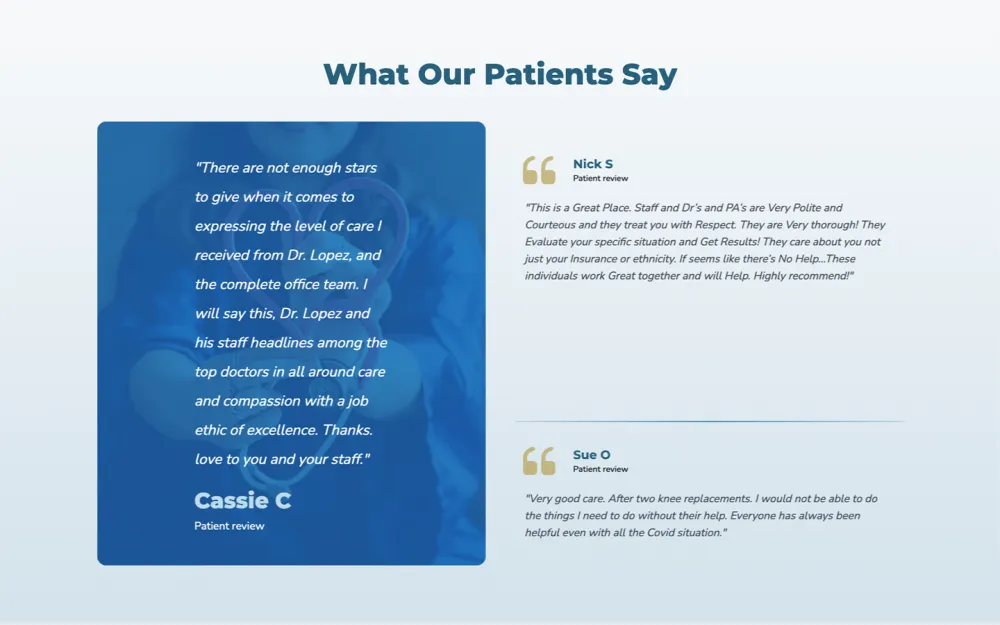
Every patient gets asked how the visit went, and every patient is invited to say so publicly. It runs off your EMR, so nobody at the front desk adds a step. Concerns reach your team the same day, while they are still fixable.
Before we started, 27.9% of this practice's reviews were one or two stars. Now it is 3.3%.
The system does not hide the unhappy patient. It invites the ninety percent who were happy and would never have thought to say so. When nobody asks, only the angry show up.
Every point counted from the profile's public review record — check it on Google right now ·the full side by side, caveat included
Your resilience score
21%
Fragile. One bad week could put you under 4.0.
2one-star reviews are all you can absorb and stay above 4.0
14is what a resilient practice absorbs at the same rating
Google will not take down a review because it is untrue. You cannot stop the patient who was told no. You can decide whether they land as one voice in two hundred, or one in forty.
Reviews also age, and some do not survive at all. Google weights recent ones most heavily, and it clears older entries in its own sweeps: of 75 reviews on a profile we manage,19 were gone twenty months later. A quarter of the stock, cleared. A wall built two years ago is shorter than it looks.
Nick Ryan has spent more than a decade inside interventional pain practices: websites, patient pipelines, and the operational mess in between. He is a Doctor of Business Administration candidate whose doctoral research examines how AI is used in interventional pain practices. Before this: a Scout Sniper team leader in the U.S. Marine Corps, then federal law enforcement with the U.S. Department of State.
Built around the systems you already run.
The reputation system works with the one you have, under a BAA.
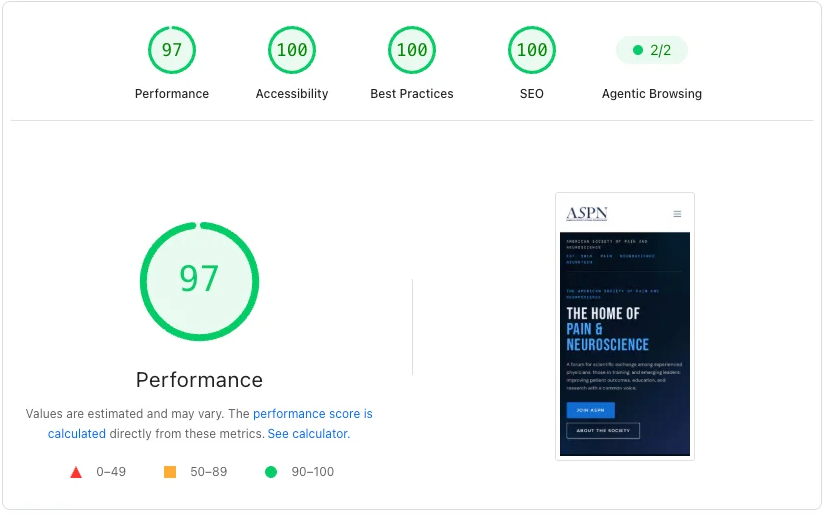
Graded by Google
When a patient searches, Google sends them to sites that load fast and read clean, and quietly buries the ones that don't. Half of patients give up on a page that takes more than three seconds.
So Google keeps a report card on every website: speed, accessibility, whether search can read it — and now, whether the AI assistants patients ask can read it too. This is the card on a site we built, graded on a phone, where the grading is hardest. Green across the board, with perfect marks for accessibility and search — and a clean pass on the AI test most of the web fails.
We draft it. Your physicians review and approve every clinical page before launch. Nothing publishes without physician sign-off.
You do. Your domain, your content, your site, including if we part ways.
Most of our clients did too. Send it over and we will tell you straight whether it needs a rebuild or a tune-up.
We will tell you plainly whether we are the right fit, and if we are not, who is.